
 18914229323

How to estimate pressure loss
Influidtransportationsystems,pressurelossisakeytechnicalparameterthatdirectlyaffectstheefficiency,energyconsumption,andequipmentselectionofthesystem.Whetheritisinheating,ventilation,airconditioning,w...
Hotline
In fluid transportation systems, pressure loss is a key technical parameter that directly affects the efficiency, energy consumption, and equipment selection of the system. Whether it is in heating, ventilation, air conditioning, water supply and drainage, petrochemical industry, or industrial production, reasonable estimation of pressure loss is crucial. This article will introduce the basic concepts, classification, and estimation methods of pressure loss.
I. Definition and classification of pressure loss
Pressure loss, also known as pressure drop, refers to the pressure drop of fluid in pipelines or equipment due to factors such as friction and local resistance. It is usually divided into two categories:
1. Frictional pressure loss along the pipeline length: Occurs throughout the entire length of the pipeline during fluid flow, mainly caused by friction between the fluid and the pipe wall.
2. Local pressure loss: Caused by elements such as elbows, valves, tees, and reducers in the pipeline, which belong to energy loss brought about by changes in flow direction or speed.
Two, Estimation of friction loss
The friction loss can be estimated by the Darcy-Weisbach Equation (Darcy-Weisbach Equation):
\Delta P_f = f \cdot \frac{L}{D} \cdot \frac{\rho v^2}{2}
Among them:
- $\Delta P_f$: Friction loss (Pa)
- $f$: Darcy friction coefficient (dimensionless)
- $L$: Pipe length (m)
- $D$: Pipe inner diameter (m)
- $\rho$: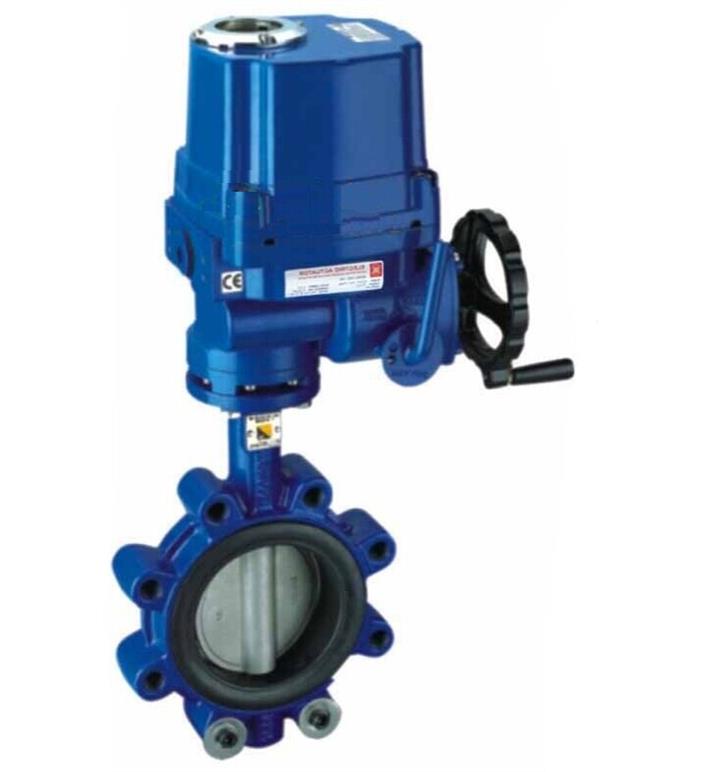 Fluid density (kg/m³)
- $v$: Average fluid velocity (m/s)
The value of the friction coefficient $f$ depends on the flow state (laminar or turbulent) and the pipe roughness, which is usually determined by the Moody Diagram or empirical formulas (such as the Colebrook equation, Swamee-Jain formula).
Three, Estimation of local pressure loss
The local pressure loss can be calculated using the following formula:
\Delta P_l = K \cdot \frac{\rho v^2}{2}
Among them:
- $\Delta P_l$: Local pressure loss (Pa)
- $K$: Local resistance coefficient (dimensionless), related to the specific type of component
- $\rho$ and $v$: As above
The $K$ values of different components can be obtained from experimental data or manuals, for example, the 90-degree elbow is about 0.75, and the fully open valve is about 0.17, etc.
Four, Calculation of total pressure loss
The total pressure loss of the system is the sum of the friction loss and all local losses along the way:
\Delta P_{\text{总}} = \Delta P_f + \sum \Delta P_l
In actual engineering design, safety factors also need to be considered to deal with deviations between design and actual operation.
Five, Matters needing attention in estimation
1. Unit unification: Ensure that all physical quantities have consistent units in the calculation to avoid errors.
2. Accurate parameter selection: The selection of flow velocity, friction coefficient, and local resistance coefficient has a significant impact on the results.
3. Flow state judgment: Determine whether it is a laminar flow or turbulent flow state through the Reynolds Number (Reynolds Number) to correctly select the friction coefficient.
4. Use software assistance: In modern engineering, CFD (Computational Fluid Dynamics) software can be used for more accurate simulation and analysis.
Six, Conclusion
Mastering the estimation method of pressure loss is not only helpful for improving the accuracy of engineering design, but also for optimizing system operation efficiency and reducing energy consumption. With the development of technology, the estimation methods and tools are also constantly improving, but understanding their basic principles is still an indispensable ability for engineers. In future engineering practice, the reasonable application of these methods can better serve the design and operation of fluid systems.
In fluid transportation systems, pressure loss is a key technical parameter that directly affects the efficiency, energy consumption, and equipment selection of the system. Whether it is in heating, ventilation, air conditioning, water supply and drainage, petrochemical industry, or industrial production, reasonable estimation of pressure loss is crucial. This article will introduce the basic concepts, classification, and estimation methods of pressure loss.
I. Definition and classification
of pressure lossPressure loss, also known as pressure drop, refers to the pressure drop of fluid in pipelines or equipment due to factors such as friction and local resistance. It is usually divided into two categories:
1. Frictional pressure loss along the pipeline length: Occurs throughout the entire length of the pipeline during fluid flow, mainly caused by friction between the fluid and the pipe wall.
2. Local pressure loss: Caused by elements such as elbows, valves, tees, and reducers in the pipeline, which belong to energy loss brought about by changes in flow direction or speed.
Two, Estimation of friction loss
The friction loss can be estimated by the Darcy-Weisbach Equation (Darcy-Weisbach Equation):
\Delta P_f = f \cdot \frac{L}{D} \cdot \frac{\rho v^2}{2}
Among them:
- $\Delta P_f$: Friction loss (Pa)
- $f$: Darcy friction coefficient (dimensionless)
- $L$: Pipe length (m)
- $D$: Pipe inner diameter (m)
- $\rho$:
Fluid density (kg/m³)- $v$: Average fluid velocity (m/s)
The value of the friction coefficient $f$ depends on the flow state (laminar or turbulent) and the pipe roughness, which is usually determined by the Moody Diagram or empirical formulas (such as the Colebrook equation, Swamee-Jain formula).
Three, Estimation of local pressure loss
The local pressure loss can be calculated using the following formula:
\Delta P_l = K \cdot \frac{\rho v^2}{2}
Among them:
- $\Delta P_l$: Local pressure loss (Pa)
- $K$: Local resistance coefficient (dimensionless), related to the specific type of component
- $\rho$ and $v$: As above
The $K$ values of different components can be obtained from experimental data or manuals, for example, the 90-degree elbow is about 0.75, and the fully open valve is about 0.17, etc.
Four, Calculation of total pressure loss
The total pressure loss of the system is the sum of the friction loss and all local losses along the way:
\Delta P_{\text{总}} = \Delta P_f + \sum \Delta P_l
In actual engineering design, safety factors also need to be considered to deal with deviations between design and actual operation.
Five, Matters needing attention in estimation
1. Unit unification: Ensure that all physical quantities have consistent units in the calculation to avoid errors.
2. Accurate parameter selection: The selection of flow velocity, friction coefficient, and local resistance coefficient has a significant impact on the results.
3. Flow state judgment: Determine whether it is a laminar flow or turbulent flow state through the Reynolds Number (Reynolds Number) to correctly select the friction coefficient.
4. Use software assistance: In modern engineering, CFD (Computational Fluid Dynamics) software can be used for more accurate simulation and analysis.
Six, Conclusion
Mastering the estimation method of pressure loss is not only helpful for improving the accuracy of engineering design, but also for optimizing system operation efficiency and reducing energy consumption. With the development of technology, the estimation methods and tools are also constantly improving, but understanding their basic principles is still an indispensable ability for engineers. In future engineering practice, the reasonable application of these methods can better serve the design and operation of fluid systems.




TOP
18914229323